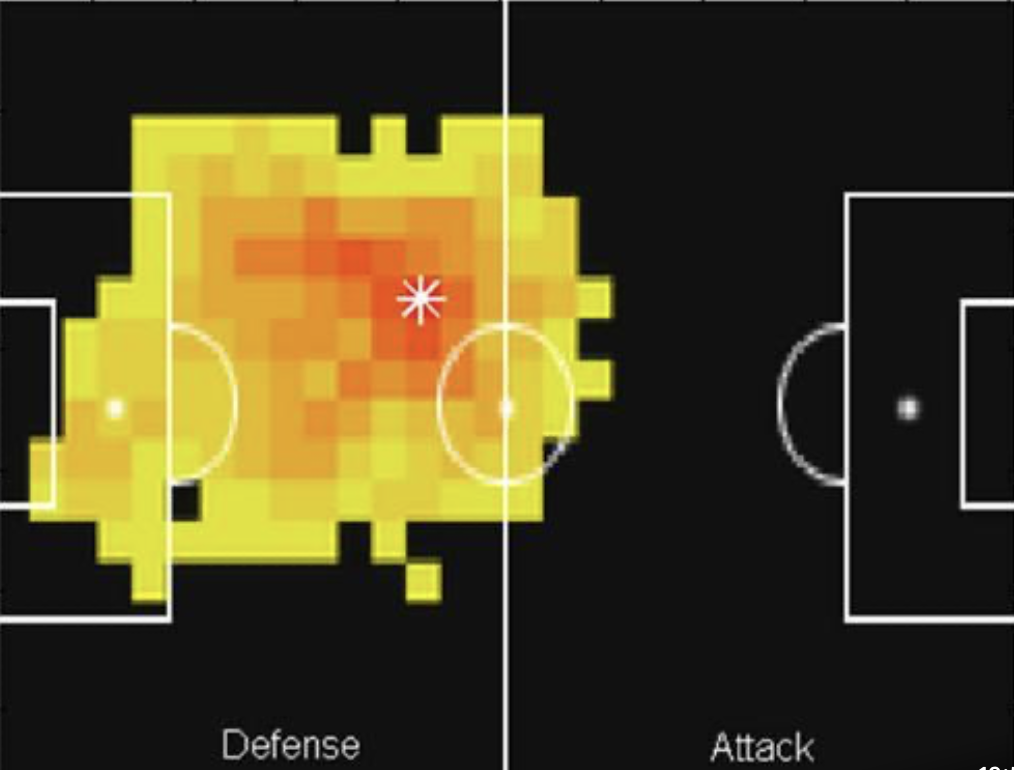
In football analytics today, injuries are not equal. The departure of a squad player is one thing; the departure of a creative midfielder, the person that dictates the pace of the game, or a goalkeeper with elite shot stopping, can alter a game and a season in significant ways. This report describes the metrics, explains the types of players that tend to change the probability of winning the most, and provides realistic ways through which analysts, bettors, and managers can measure the effects of injuries for better soccer prediction.
What is “win probability” and why it matters
Win probability is an estimate of the likelihood that a team will win a specific game based on the state of the game (scoreline, number of minutes played, the number of players on the field and the recent action) as well as on a longer term. This is computed by researchers and practitioners by using machine learning, Bayesian models, Monte Carlo simulating or logistic regression with past sequences of match states. These models enable us to make the very qualitative statement, this player is important, into quantitative projected change in chance-of-winning in the absence or removal of the player.
How injuries get translated into win probability swings
Two popular techniques estimate the effectiveness of an injury on win possibility:
- Direct in game change (WPA style): Trace the changes in the win probability when the removal of a player occurs during the game and attribute the change to the event (injury + substitution). This is spiritually similar to Win Probability Added (WPA) in other sports except that it needs to control confounders carefully.
- Roster level simulation / counterfactuals: Simulate season or matches and have the injured player replaced by realistic substitutes (bench player, tactical switch) and compare the win probability in thousands of simulations. This method is stronger in terms of prematch or season level sensitivity to impact, and it is to this direction many public projection models are heading. FiveThirtyEight and others have clearly talked about the way lineup and availability adjustments would be used to drive SPI style ratings and estimates.
The two methods are based on good underlying player- and event-level variables, including expected goals (xG), passing value, defensive actions and minutes played. According to recent studies of xG and player-corrected models, there is a significant effect on predictive accuracy by modifying the shot probabilities and contributions of the players, a fundamental requirement of plausible impacts on injury.
Which player types tend to change win probability the most?
According to the logic of simulation, the empirical studies and practitioner reports, the most winning players when injured are:
- Central creative midfielders (playmakers): They manipulate transition and the creation of chances. Their removal can decrease both team xG and possession control by a significant margin.
- Elite goalkeepers: An elite keeper is capable of saving several high xG shots, losing those shots, a keeper makes his or her opponents more efficient at finishing therefore improving the chances of a win.
- Primary strikers (high xG conversion): There are those forwards, who invariably create or turn opportunities; their absence diminishes the expected goals as well as potential to score a last minute goal.
- Ball winning defensive midfielders / centerbacks: They decrease the xG of opponents with their defensive actions; substituting them will frequently increase the conceded chances.
- Tactical linchpins (captains/tactical leaders): Impact is diffuse and may manifest itself in such measures as team pressing success and fewer errors.
An example study of injuries in a team (elite squads) over a 2025 time frame indicates that there can be few instances where the replacement of a special athlete can be performance neutral, which confirms that injuries can systematically change the performance of teams in case key contributors are injured.
A simple, practical method you can use today (step by step)
In case one of you has to estimate the impact of injury on a single player fast, then you can use the 6 step methodology:
- Collect baseline data: xG, shot creating actions, defensive actions, minutes and team performance with the player available and when unavailable over the last 12 months.
- Compute player adjusted contribution: Convert those crude statistics to how many goals (attackers) or goals prevented (defenders/keepers) you would expect to get in 90. Apply published xG models or use your regression.
- Simulate match outcomes: Given an upcoming match, randomly perform N (e.g. 10,000) Monte Carlo match simulations with team SPI/xG as baseline, one with the player and one with a replacement (bench player or positional swap).
- Compare win probabilities: Compute the difference between simulated win probability (team wins/number of sims) in the two scenarios; the difference is the estimate of impact of injuries.
- Adjust for match importance and context: Increasing the raw impact of high importance matches (knockouts) or when the quality of the replacement is significantly poorer. FiveThirtyEight directly takes into consideration the match importance in translating predicted results into measured value.
- Report uncertainty: Show the result as a percentage range (e.g. – 6% to – 10%, the probability of winning) as opposed to a single number.
This is a simpler but statistically rigorous approach and usable by the majority of analysts and high level punters.
Examples & illustrative cases
- Case A: Losing a creative #10 before a big match: Simulation indicates that the probability of the team winning declines by 10 percentage points 46% to 36% (10 percentage points) as the replacement fails to maintain the creation of chances.
- Case B: Midmatch injury to an elite goalkeeper: WPA style in game analysis of goalkeepers has shown that when an injury occurs, there can be a significant immediate decrease in the number of goals that should have been expected as conceded and a 6 to 8% decrease in the chances of winning a game immediately unless the replacement is just as well respected in terms of shot stopping.
These are not the real numbers; your numbers will be determined by the model, quality of the data and the opponent.
Limitations and pitfalls
- Confounding game state changes: With injuries, substitutions, tactical changes or red cards can happen and confound attribution. These have to be managed in WPA style estimates.
- Small sample sizes: The injury of a rare elite player provides a few historical instances, adding to the uncertainty.
- Quality of replacement: Bench strength is all over the place some teams can use near equals as starters; others are unable. Simulation should be realistic in replacement options.
- Psychological/team morale effects: Hard to measure, may be real; these soft impacts are often not taken into account in models.
Practical uses (who benefits)
- Team analysts & coaches: Determine the time to change tactics or hasten recovery and measure transfer market requirements.
- Sports bettors: Use powerful injury impact estimates on forming prematch betting and real time markets, just as platforms like Soccervista rely on data driven insights.
- Journalists & fans: Stop the speculation (we will miss him) and make claims that are based on data about the chances of winning the match.
- Sports economists and researchers: Are there season level implications of losing a player in terms of points and revenue?
FAQs
Can win probability models capture the impact of injuries in football?
Most of the win probability models do not tell you the impact that an injury will have on the match. It is easy for them to tell you how possession, defensive strength, and xG can affect a game.
Are some injuries predictable than others?
Yes, there are some injuries that are more predictable than others and it is mostly those that happen to players who are important for how a team plays.
How often should each team update injury impact?
The updates about injuries should happen as soon as the injury takes place and as soon as the return is confirmed.
Do public projection systems such as FiveThirtyEight account for injuries?
No, some of these public projection systems sometimes ignore injuries and other times they do not factor in the impact of the injuries properly.
Conclusion
Injuries are important to be considered when you are conducting football analysis because the absence of an injured player can reduce the match win probability of the team. If you look at the level of a player’s contribution that is xG and its importance to the team, you can easily judge how his absence will affect how the team will play, which also enhances the accuracy of any Soccervista prediction.